
275Days
12Hours
43Minutes
20Seconds
Save the Dates:
29th Annual ICMAC,
June 25-27, 2027 —
30th Annual ICMAC,
June 30 - July 2, 2028
We will be bringing you an extensive seminar curriculum on different topics of Chinese martial arts taught by leading masters.
Seminars are one hour in length but may be presented in two or more parts.
Seminars schedule is as follows:
Friday, June 27, 2025: 5:00 pm – 8:00 pm
Sunday, June 29, 2025: 7:30 am – 9:30 am
Seminar Registration fee is $85, which includes the first 1-hour session. Each additional 1-hour session is $35. Registration is at the door only.
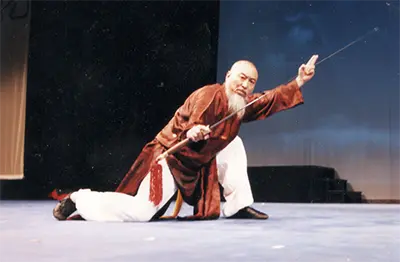
Master Sun Deyao is a 7th generation descendant of the Supreme Ultimate Plum Blossom Mantis Boxing system. Based in Duluth, Georgia, he promotes martial arts internationally and has students in more than 30 nations.
SD1 – Friday 6-7 pm: Immortal Points the Way, Part 1 (Xianren Zhi Lu 仙人指路).
SD2 – Friday 7-8 pm: Immortal Points the Way, Part 2 (Xianren Zhi Lu 仙人指路).
SD3 – Sunday 7:30-8:30 am: White Ape Guards the Post, Part 1 (Baiyuan Zuo Gang 白猿坐岗)
SD4 – Sunday 8:30-9:30 am: White Ape Guards the Post, Part 2 (Baiyuan Zuo Gang 白猿坐岗)
Xianren Zhi Lu (仙人指路) – Immortal Points the Way
Xianren Zhi Lu, “Immortal Points the Way,” emphasizes clarity of intention, precise direction, and strategic movement. Drawing from Daoist imagery, the “immortal” symbolizes wisdom and foresight, while “pointing the way” reflects purposeful technique and guidance in both motion and mindset. This form focuses on direct strikes, leading techniques, and intelligent redirection of force. It trains the practitioner to control the flow of combat, subtly guiding the opponent’s energy while maintaining a commanding presence. Xianren Zhi Lu blends grace with tactical precision, making it a vital study in the principles of leading, yielding, and asserting with clarity and purpose.
Baiyuan Zuo Gang (白猿坐岗) – White Ape Guards the Post
Baiyuan Zuo Gang draws inspiration from the legendary White Ape, a mythical figure in Chinese martial arts known for agility, strength, and strategic intelligence. The name suggests a guardian at a watchful post, symbolizing a powerful yet controlled approach to combat. This form emphasizes rooted stances, explosive counters, and precise hand techniques, embodying the spirit of a vigilant warrior who remains ready to defend while maintaining a commanding presence. It develops both offensive and defensive skills, balancing agility with stability.
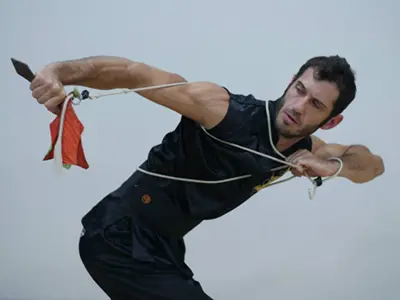
Master Frank Hatsis is the founder of the Rope Dart Academy. He is an expert on rope dart technique and instruction, and a past member of the USA Wushu Team.
FH 1 – Friday 6-7 pm – Rope Dart 101: Spins
This class will focus on the fundamental aspects of Rope Dart play! Learn the beginner secrets that will assist in understanding the Rope Dart at its very foundations! Students will be introduced to spins, footwork and terminology. Training methods and best practice philosophy will also be covered.
FH 2 – Friday 7-8 pm – Rope Dart 102: Shots
This class will build on the previous class. Here, students will be introduced to ‘Shots’, which are projections of the Rope Dart using various body joints (elbow, knee, foot)! Once an understanding of shots is acquired, students will be encouraged to combine Spins from the first class with Shots to perform Spin-Shot combinations! Training methods and best practice philosophy will also be covered.
FH 3 – Sunday 8:30-9:30 am – Rope Dart 103: Wraps
This class builds on the previous class. Here students will be introduced to ‘Wraps’. A wrap’s inherent appearance makes the player look as if they are tied up – however, the ‘knots’ are an illusion! Once understanding of wraps is acquired, students will be encouraged to combine all they’ve learned to create Wrap-Spin-Shot combinations! Training methods and best practice philosophy will also be covered.

Master Sam Winters operates the Hsin Yung-I Chuan School in Orlando, Florida, teaching Earth Style Tai Chi, Meimen Qigong, push hands, straight sword, and broadsword.
SW 1 – Friday 7-8 pm
Pingshuai /Qigong (Part 1)
SW 2 – Sunday 8:30-9:30 am
Pingshuai/Qigong (Part 2) (SW 1 required)
Pingshuai exercises enhance the immune system, improve balance, makes joints and muscles more flexible, fortifies muscles, joints and bones, enhances blood and Qi circulation, replenishes energy, relaxes, calms and clears the mind, and sharpens the senses.
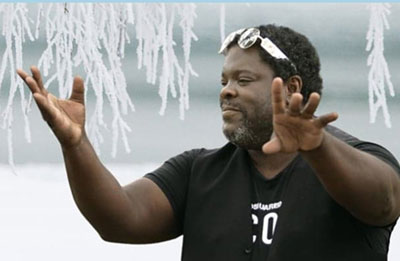
Master Eric Randolph is the founder of The Way of Chi in Pittsburgh, PA. He teaches Taiji and Push Hands (sensing hands), as well as healing Qigong.
ER1 – Friday 6-7 pm
Advanced Sensing Hands Dynamics Part I (immovable body, immovable arm, and the illusion of fluid motion)
ER2 – Friday 7-8 pm
Advanced Sensing Hands Dynamics Part II (from sensing hands to practical martial applications)

CW1 – Friday 6-7 pm – Developing Qi
No experience needed. Learn how to develop internal Qi. Hands-on Wu-Wei, spacing, Yin-Yang separation, body mechanics, and joint-joint connection. Learn how to do Qi-healing for yourself.
CW2 – Friday 7-8 pm – Qi Healing
No experience needed. Learn how to develop Qi that extends to the outside of the body. Hands-on Yi, Qi, Jin, intent, Qi connection, and joint-joint separation. Learn how to do Qi-healing for others and pets.
CW3 – Sunday 8-9 am – Basic Push Hands
Basic Tai Chi knowledge helpful. Learn how to develop the Qi Fullness technique. Hands-on Push hands using Capture and Seize with Adhere, Stick, Join, and Follow. Learn how to develop the high-level Sticky-hand technique.
CW4 – Sunday 9-10 am – Advanced Push Hands
Basic Tai Chi knowledge helpful. Learn how to develop the Emptiness technique. Hands-on Push hands using Qi Elastic, Silk-Reeling, and Explosion. Learn how to develop an advanced Air-bending technique.
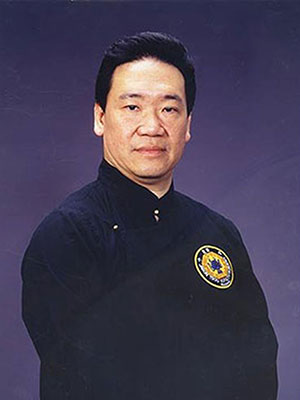
Bagua Zhang Seminar Outline
JT1 – Fundamental Techniques of Bagua Zhang (Friday 6-7 pm)
“Movement is the Core”: Body Mechanics and Palm Work
“Palm is Not Just Palm, Whole Body as a Weapon”: Spiral Force for Penetration and Linkin1
JT – 2 Combat Applications of Bagua Zhang (Sunday 8-9 am)
“Dragon Gate (Adaptability), Tiger Gate (High-Risk Tactics), Snake Gate (Subtle Techniques)”
“Feint to the East, Strike West; Ambiguous Presence; Spiral Entanglement, Unbroken Continuity”
Case Studies: